Red Bull did not grow by advertising a drink. It built a system where the drink became secondary to the experience it enabled.
At the outset, the category was crowded with functional claims. Energy, focus, stamina. Competing on features alone would have placed Red Bull in a race toward sameness. Instead, it identified a deeper behavioral driver. The people drawn to energy drinks were not seeking ingredients. They were seeking intensity. Speed, risk, elevation, control at the edge.
The strategy shifted from selling a product to owning a state of mind.
Rather than creating campaigns, Red Bull built a content infrastructure. This included Red Bull Media House, a full-scale production engine capable of producing films, live events, documentaries, and real-time coverage. The output was not designed as advertising. It was designed as culture.
Events like the Red Bull Stratos became defining moments. Millions watched as a human being stepped out of a capsule at the edge of space. The brand was present, but not intrusive. It enabled the moment rather than interrupting it. The content did not ask for attention. It commanded it.
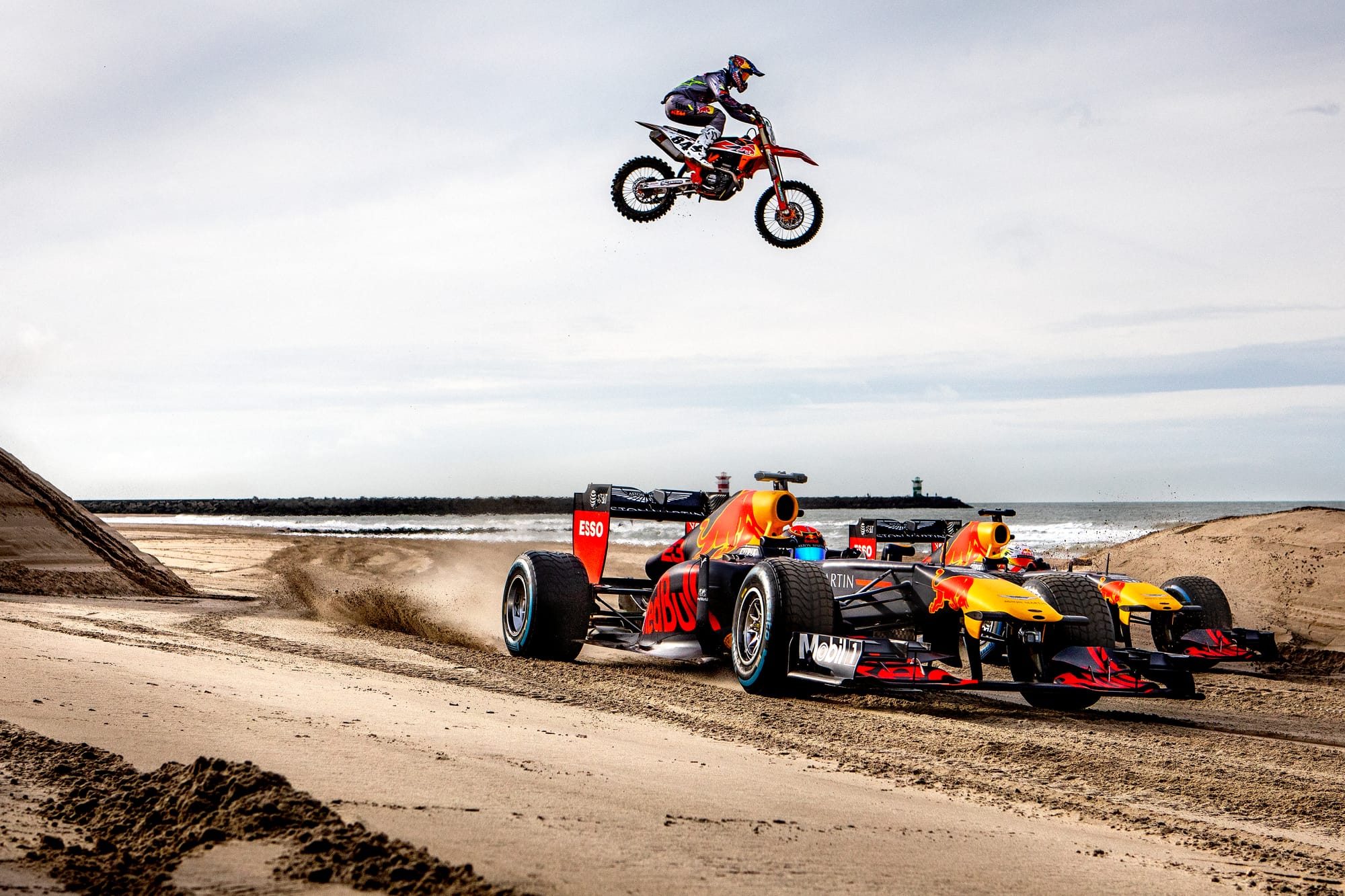
This approach created a continuous stream of high-intensity narratives. Motorsports, cliff diving, snowboarding, freestyle biking. Each piece of content reinforced the same emotional territory. Precision under pressure. Control in chaos. Human limits being tested and extended.
Accessibility played a critical role in distribution. Content was designed to travel across platforms seamlessly. Short-form clips for social media, long-form documentaries for deeper engagement, live streams for real-time immersion. Regardless of format, the experience remained consistent. Users could enter the ecosystem from any point and understand the essence immediately.
Performance here is not about load speed alone. It is about delivery at the right moment. Red Bull optimized for presence in cultural timelines. When an event happened, content was available instantly, across channels. This reduced the gap between experience and audience, making viewers feel part of the moment rather than observers of it.
The ecosystem is tightly interwoven. Athletes are not just endorsers. They are central characters. Events are not isolated. They feed into ongoing narratives. Media, sponsorship, and product all reinforce each other without feeling forced. A user watching a stunt, reading a story, or attending an event is always within the same experiential loop.
From a content marketing perspective, this creates compounding attention. Instead of one-off campaigns, Red Bull builds long-term memory structures. Users associate the brand with a feeling, not a message. This significantly reduces the need for traditional persuasion.
The impact is measurable in both reach and positioning. Red Bull commands a global audience across platforms. Its media channels rival traditional broadcasters. More importantly, it occupies a unique space in the consumer’s mind. It is not seen as a beverage competing on price or taste. It is seen as a symbol of energy and intensity.
This has direct business implications. The product gains meaning beyond its function. Distribution becomes easier because demand is driven by cultural relevance. Pricing pressure is reduced because the brand operates in a category it largely defined.
The strategy is precise in its intent. Do not market the product. Build the world in which the product naturally belongs.
By doing this, Red Bull transformed content from a supporting function into the core of its business model. Every piece of media is not an expense, but an asset that extends the brand’s reach and reinforces its identity.
The result is a system where content is not used to attract attention to the product. The product exists within the attention that content has already captured.
This is the shift. From advertising that interrupts to experiences that people seek out. From messaging to moments. From visibility to cultural ownership.
And that is why Red Bull does not compete in content marketing. It defines it.
Red Bull did not grow by advertising a drink. It built a system where the drink became secondary to the experience it enabled.
At the outset, the category was crowded with functional claims. Energy, focus, stamina. Competing on features alone would have placed Red Bull in a race toward sameness. Instead, it identified a deeper behavioral driver. The people drawn to energy drinks were not seeking ingredients. They were seeking intensity. Speed, risk, elevation, control at the edge.
The strategy shifted from selling a product to owning a state of mind.
Rather than creating campaigns, Red Bull built a content infrastructure. This included Red Bull Media House, a full-scale production engine capable of producing films, live events, documentaries, and real-time coverage. The output was not designed as advertising. It was designed as culture.
Events like the Red Bull Stratos became defining moments. Millions watched as a human being stepped out of a capsule at the edge of space. The brand was present, but not intrusive. It enabled the moment rather than interrupting it. The content did not ask for attention. It commanded it.
This approach created a continuous stream of high-intensity narratives. Motorsports, cliff diving, snowboarding, freestyle biking. Each piece of content reinforced the same emotional territory. Precision under pressure. Control in chaos. Human limits being tested and extended.
Accessibility played a critical role in distribution. Content was designed to travel across platforms seamlessly. Short-form clips for social media, long-form documentaries for deeper engagement, live streams for real-time immersion. Regardless of format, the experience remained consistent. Users could enter the ecosystem from any point and understand the essence immediately.
Performance here is not about load speed alone. It is about delivery at the right moment. Red Bull optimized for presence in cultural timelines. When an event happened, content was available instantly, across channels. This reduced the gap between experience and audience, making viewers feel part of the moment rather than observers of it.
The ecosystem is tightly interwoven. Athletes are not just endorsers. They are central characters. Events are not isolated. They feed into ongoing narratives. Media, sponsorship, and product all reinforce each other without feeling forced. A user watching a stunt, reading a story, or attending an event is always within the same experiential loop.
From a content marketing perspective, this creates compounding attention. Instead of one-off campaigns, Red Bull builds long-term memory structures. Users associate the brand with a feeling, not a message. This significantly reduces the need for traditional persuasion.
The impact is measurable in both reach and positioning. Red Bull commands a global audience across platforms. Its media channels rival traditional broadcasters. More importantly, it occupies a unique space in the consumer’s mind. It is not seen as a beverage competing on price or taste. It is seen as a symbol of energy and intensity.
This has direct business implications. The product gains meaning beyond its function. Distribution becomes easier because demand is driven by cultural relevance. Pricing pressure is reduced because the brand operates in a category it largely defined.
The strategy is precise in its intent. Do not market the product. Build the world in which the product naturally belongs.
By doing this, Red Bull transformed content from a supporting function into the core of its business model. Every piece of media is not an expense, but an asset that extends the brand’s reach and reinforces its identity.
The result is a system where content is not used to attract attention to the product. The product exists within the attention that content has already captured.
This is the shift. From advertising that interrupts to experiences that people seek out. From messaging to moments. From visibility to cultural ownership.
And that is why Red Bull does not compete in content marketing. It defines it.